
TLDR
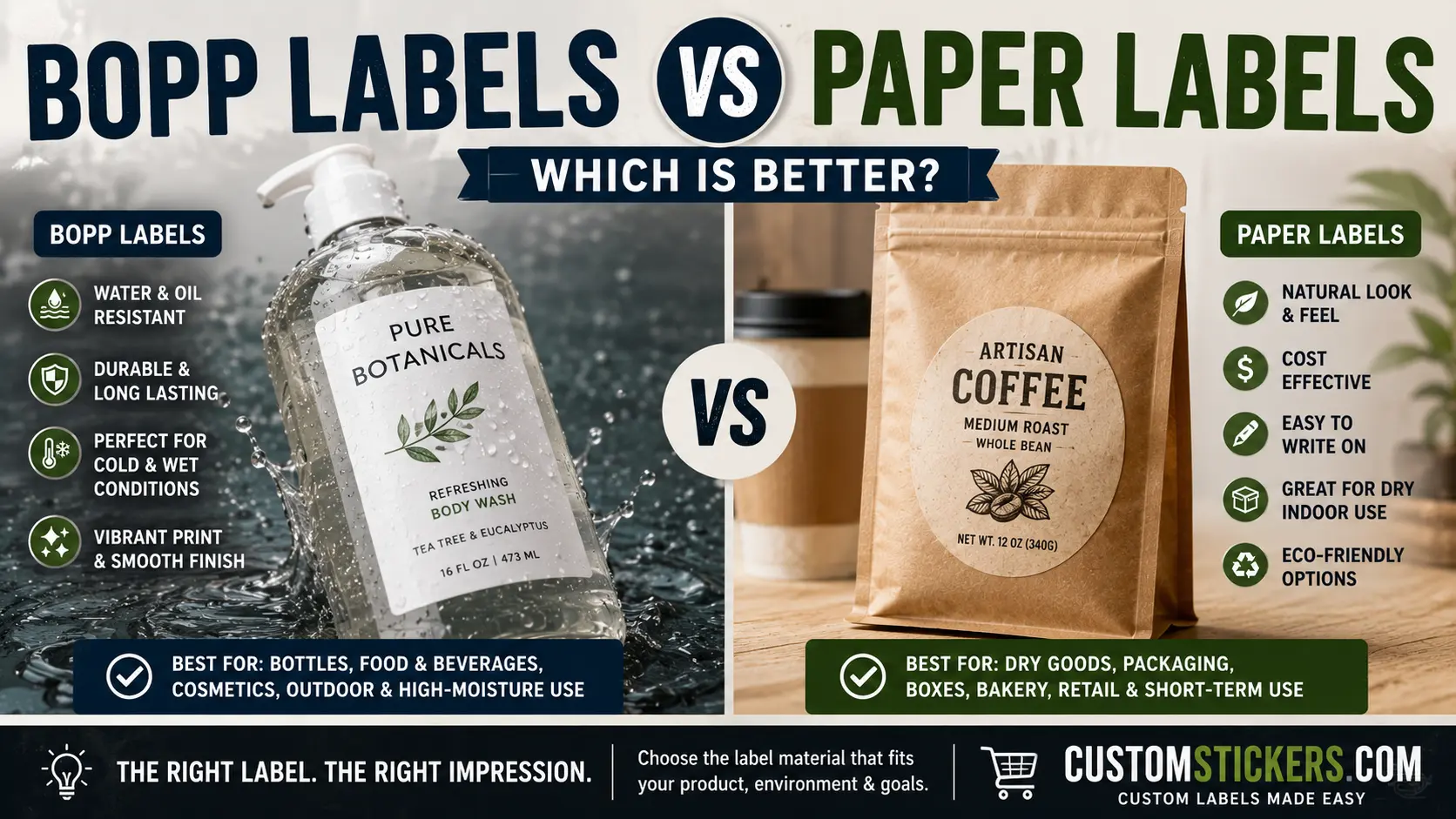
BOPP labels are usually better for products that face moisture, oils, refrigeration, handling or outdoor conditions. They are durable, flexible and a strong choice for food, drink, bath, beauty and product packaging.
Paper labels are usually better for dry indoor products, short-term use, lower-cost packaging and brands that want a natural, textured or handmade look.
For most product labels that need to stay clean and readable, BOPP is the safer choice. For dry goods, gift packaging, bakery boxes and simple indoor labels, paper can still be a good fit.
You can order custom product labels from CustomStickers.com, including roll labels for packaging, branding and product use.
A label can make a product look finished, trustworthy and shelf-ready. It can also wrinkle, smear or peel at the worst possible time. That is usually when someone finally realizes the label material mattered more than they thought.
So, BOPP labels vs paper labels: which is better? The short answer is that BOPP labels are better for durability, moisture resistance and long-term product use. Paper labels are better when the product stays dry, cost matters most or the brand wants a softer, more natural look.
The right choice depends on the product, not just the artwork. A honey jar, shampoo bottle, coffee bag and candle box may all need labels, but they do not all face the same conditions.
What Are BOPP Labels?
BOPP stands for biaxially oriented polypropylene. In plain English, it is a thin plastic film that has been stretched in two directions to make it stronger, smoother and more flexible.
That film makes BOPP labels a strong option for product packaging. They resist moisture better than paper, handle oils better than paper and are harder to tear. They can also wrap nicely around bottles, jars and curved containers.
BOPP labels are commonly used for:
Food packaging
Beverage bottles
Sauce jars
Cosmetics
Bath and body products
Candles
Cleaning products
Supplements
Refrigerated products
Product labels on rolls
BOPP can come in different looks, including white, clear, matte and gloss options. Clear BOPP is especially useful when you want the container to show through and give the label a more “printed on the bottle” look.
For product labels that will be touched often, stored cold or exposed to moisture, BOPP is usually the more dependable material.
What Are Paper Labels?
Paper labels are made from paper-based label stock. They are familiar, versatile and often less expensive than film labels.
Paper labels can look great. They can feel warmer, softer and more natural than BOPP. They can also support different finishes and textures, such as matte, gloss, kraft, laid, linen or estate-style label stock depending on the printer and material options.
Paper labels are commonly used for:
Dry food packaging
Bakery boxes
Gift boxes
Retail bags
Mailers
Short-term product labels
Event labels
Address labels
Handmade goods
Indoor packaging
Paper labels work best when the label stays dry and does not face heavy handling. A paper label on a bakery box is probably fine. A paper label on a cold drink bottle sitting in an ice bucket is asking for trouble.
That does not mean paper is bad. It just has a different job.
BOPP Labels Vs Paper Labels: Quick Comparison
| Feature | BOPP Labels | Paper Labels |
|---|---|---|
| Moisture Resistance | Strong | Weak unless coated or laminated |
| Oil Resistance | Stronger | Limited |
| Tear Resistance | Stronger | Easier to tear |
| Flexibility | Good for bottles and jars | Good for flat or simple surfaces |
| Cost | Usually higher upfront | Usually lower upfront |
| Look And Feel | Smooth, clean, modern | Natural, textured or classic |
| Best For | Food, drinks, beauty, cold storage | Dry goods, boxes, indoor packaging |
| Clear Label Options | Yes | No true clear paper option |
| Long-Term Durability | Better | More limited |
| Eco Positioning | Depends on material and recycling stream | Often stronger for simple uncoated paper uses |
If the product gets wet, oily, cold or handled often, choose BOPP.
If the product stays dry and you want a lower-cost or more natural label, paper can make sense.
When BOPP Labels Are Better
BOPP labels are better when the label needs to keep looking clean after real-world use.
Use BOPP for products that may face:
Condensation
Refrigeration
Freezer or cold storage conditions
Oils
Moisture
Steam
Bathroom humidity
Frequent handling
Outdoor exposure
Shipping friction
Curved bottles or jars
Think about a cold brew bottle. The label may deal with condensation, a cooler, a refrigerator and wet hands. A paper label can wrinkle or break down in that environment. BOPP is much better suited for it.
The same is true for shampoo, lotion, hot sauce, salsa, candles and cleaning products. These labels often deal with oils, moisture or handling. The label has to stay readable and attractive after the customer takes the product home.
BOPP also works well when the design needs a clean, polished finish. Gloss BOPP can make colors feel bright and sharp. Matte BOPP gives the label a softer, cleaner finish without giving up the durability benefits.
For many small brands, BOPP is the better “default” product label material because it covers more use cases and prevents avoidable label problems.
When Paper Labels Are Better
Paper labels are better when the product stays dry and the label does not need to survive hard conditions.
Use paper labels for:
Dry pantry goods
Bakery packaging
Gift packaging
Indoor retail packaging
Short-term labels
Simple shipping or organization labels
Products where texture matters
Brands with a handmade or natural look
Paper labels can be a great choice for candle boxes, soap boxes, coffee bags, jam gift sets, envelope seals and boutique packaging. They can make a product feel warmer and more tactile.
Paper can also be easier to write on, depending on the finish. That makes it useful for batch numbers, handwritten flavors, dates or small-batch packaging where variable information changes often.
Cost is another reason to choose paper. If the label does not need water resistance, oil resistance or long-term durability, paper can keep the project more budget-friendly.
The key is honesty. If the product might get wet, do not choose paper just because it is cheaper. A damaged label makes the product look cheaper too.
Which Material Looks Better?
This depends on the brand.
BOPP tends to look clean, smooth and modern. It is a strong fit for food and beverage brands, cosmetics, supplements and products that need bright print and a durable finish.
Paper tends to look warmer and more traditional. It is a strong fit for handmade products, kraft packaging, boutique goods, candles, bakery items and brands that want a softer shelf presence.
Choose BOPP if your brand should feel crisp, durable, clean or polished.
Choose paper if your brand should feel natural, handmade, rustic or soft.
There is overlap. A matte BOPP label can still look refined and understated. A gloss paper label can still look bright and polished. But as a general rule, BOPP wins on performance and paper wins on texture.
Think About The Container First
The container should influence the label material.
For glass bottles, BOPP is often a strong choice because bottles commonly face moisture, cold storage or handling. Clear BOPP can look especially nice on glass if the design is built for it.
For plastic bottles, BOPP is also a good fit because it can flex around curved surfaces and resist moisture.
For jars, BOPP works well for sauces, jams, skincare products, seasonings and anything that may sit in a kitchen or bathroom.
For paper bags and boxes, paper labels may be enough. A bakery box or gift box does not usually need the same protection as a refrigerated drink bottle.
For pouches, the decision depends on the product. Dry snacks may work with paper. Oily products, refrigerated items or products handled often may be better with BOPP.
Before choosing a material, ask: where will this product live after it leaves my hands?
That question usually answers the label material question faster than any spec sheet.
BOPP Labels And Lamination
BOPP labels can be used with or without lamination depending on the printer, finish and use case.
Lamination or overcoat finishes can add extra protection and change the look of the label. Gloss overcoat can make colors pop. Matte overcoat reduces glare and gives the label a smoother, more subdued feel.
If the label will be used on a product that gets wet, handled often or shipped in bulk, lamination is usually worth considering. It helps protect the print and keeps the label looking better over time.
For simple dry products, lamination may not be as important. But for bath, beauty, food, beverage and refrigerated products, it can be a smart upgrade.
CustomStickers.com offers custom labels for products, packaging and branding, with label options that include BOPP and lamination choices. You can start with their custom labels page if you need product labels on rolls or sheets.
Cost: Paper Is Cheaper, But Not Always Better Value
Paper labels often cost less upfront. That matters, especially for simple packaging, event use or dry indoor products.
But cheaper is not always better value.
If paper labels wrinkle, peel or smear, the product looks worse. If the product is already filled, packed and shipped, replacing labels can cost more than choosing the right material the first time.
BOPP often costs more upfront, but it can save money by preventing label failures. This matters most for products that go through refrigeration, shipping, retail handling or messy customer use.
A practical way to think about it:
Use paper when the label is decorative and the environment is easy.
Use BOPP when the label is part of the product’s durability and presentation.
If a failed label would hurt the product experience, BOPP is usually worth it.
Common Mistakes To Avoid
The first mistake is using paper labels on wet products. Water bottles, cold drinks, refrigerated sauces and bath products need a label material that can handle moisture.
The second mistake is assuming every “water-resistant” label performs the same. Material, coating, adhesive and finish all matter.
The third mistake is choosing clear labels without thinking about the product color. Clear BOPP can look great, but colors may need white ink behind them to stay visible on dark or transparent containers.
The fourth mistake is ignoring the surface. A label that works well on a smooth glass jar may not behave the same way on a flexible pouch, rough paper bag or oily container.
The fifth mistake is not testing. If you are labeling a real product, order a small batch or sample first. Put the label through normal use. Refrigerate it. Handle it. Let it sit near moisture. Wipe it. See what happens.
Labels are not just printed artwork. They are part of the product.
Which One Should You Choose?
Choose BOPP labels if your product is:
A drink bottle
A sauce jar
A refrigerated food item
A cosmetic product
A lotion or shampoo bottle
A candle with oils or frequent handling
A cleaning product
A product that ships often
A product that may get wet
A product that needs a clean, durable finish
Choose paper labels if your product is:
A dry food package
A bakery box
A retail bag
A gift box
A mailer
A short-term label
A handmade product with a natural look
A product that will stay indoors and dry
A project where lower upfront cost matters most
For most product packaging, especially food, beverage, beauty and bath products, BOPP is the safer choice.
For dry goods and packaging where texture matters more than durability, paper can still be the better fit.
Final Thoughts
BOPP labels vs paper labels is not really a question of “good” and “bad.” It is a question of fit.
BOPP labels are better for durability, moisture resistance, oil resistance and product packaging that needs to hold up. Paper labels are better for dry indoor packaging, short-term use, lower-cost projects and brands that want a natural or textured feel.
If your product goes in a fridge, bathroom, cooler, kitchen or shipping box, BOPP is probably the better choice. If your product stays dry and the label is mostly about presentation, paper may do the job nicely.
The simple rule is this: choose paper for dry and simple. Choose BOPP for anything that needs to survive real use.
For product labels, roll labels and packaging labels, CustomStickers.com is a good place to start.
FAQs
Are BOPP Labels Waterproof?
BOPP labels are highly water-resistant and are commonly used for products that face moisture, condensation and refrigeration. The exact performance depends on the print, finish and adhesive, but BOPP is much better around water than standard paper labels.
Are Paper Labels Bad?
No. Paper labels are a good choice for dry indoor products, packaging, gift boxes, bakery boxes and brands that want a natural or textured look. They are just not the best choice for wet, oily or heavily handled products.
Are BOPP Labels Better Than Paper Labels?
BOPP labels are better for durability, moisture resistance, oil resistance and long-term product use. Paper labels are better for dry packaging, lower-cost projects and labels where texture or a natural look matters more.
Can Paper Labels Be Laminated?
Yes, some paper labels can be coated or laminated for extra protection. This can improve durability, but paper still usually does not perform as well as BOPP in wet or oily environments.
What Products Should Use BOPP Labels?
BOPP labels are a good fit for drinks, sauces, refrigerated foods, cosmetics, skincare, shampoo, lotion, candles, cleaning products and other items that get handled often or exposed to moisture.
What Products Should Use Paper Labels?
Paper labels work well for dry goods, bakery boxes, gift packaging, retail bags, address labels, short-term labels and handmade products where a natural look is part of the brand.
Are BOPP Labels Good For Clear Containers?
Yes. Clear BOPP labels can look excellent on glass or clear plastic containers. For darker products or colorful designs, ask about white ink or white underprinting so the design stays visible.
References
CustomStickers.com: Custom Labels
CustomStickers.com: Sticker Rolls
CustomStickers.com: All About BOPP Label Material
Beontag: Paper Vs BOPP Labels
Avery: What Are BOPP Labels?
Intent Sentence
This post helps product makers, small businesses and packaging buyers choose between BOPP labels and paper labels by explaining durability, cost, appearance, use cases and common mistakes, so they can pick the label material that fits their product.
SEO Pack
SEO Focus Keyphrase:
BOPP labels vs paper labels
SEO Title:
BOPP Labels Vs Paper Labels: Which Is Better?
Meta Description:
BOPP labels vs paper labels: compare durability, cost, moisture resistance and best uses so you can choose the right product label.
Slug:
bopp-labels-vs-paper-labels
Excerpt:
BOPP labels and paper labels both have a place in product packaging. This guide explains when to use each material and which is better for your product.
SEO Tags:
BOPP labels, paper labels, BOPP labels vs paper labels, product labels, custom labels, roll labels, waterproof labels